20101125

Found physics: turkey cooling

"...Imagine what would happen if you took a Thanksgiving turkey piping hot from the oven and immediately placed it in a freezer. (Consider a perfect freezer--one that can remove heat instantly and always stay at its set temperature.) Initially the turkey would be at the same temperature throughout (assuming that you had roasted it for sufficiently long). Only a very thin skin would immediately take on the temperature of the freezer. But soon, the outer layers of turkey meat would cool as heat diffused outward, even though the center retained its initial oven-like temperature. Eventually, of course, everything including the stuffing would cool off; that is, the temperature inside your turkey would depend both on the distance from the surface and on the time elapsed since you placed it in the freezer."
--Philip C. England, Peter Molnar, and Frank M. Richter, "Kelvin, Perry and the Age of the Earth," American Scientist, volume 95 number 4, p. 342 (2007)
Previous post:
  • The "Turkey/Cornish Hen Effect".

    Related posts:
  • Bergman's Rule (wikipedia.org).
  • Allen's Rule (wikipedia.org).
  • 20101123

    Astronomy current events question: Milky Way bubbles

    Astronomy 210L, Fall Semester 2010
    Cuesta College, San Luis Obispo, CA

    Students are assigned to read online articles on current astronomy events, and take a short current events quiz during the first 10 minutes of lab. (This motivates students to show up promptly to lab, as the time cut-off for the quiz is strictly enforced!)
    Kelly Beatty, "Why is the Milky Way Blowing Bubbles?," November 11, 2010
    http://www.skyandtelescope.com/community/skyblog/newsblog/107302599.html
    Images of __________ above and below the Milky Way have been extracted from NASA Fermi Large Area Telescope data.
    (A) dark matter.
    (B) antimatter vortexes.
    (C) disrupted dwarf galaxies.
    (D) rogue black holes.
    (E) gamma-ray bubbles.

    Correct answer: (E)

    Student responses
    Sections 70178, 70186, 70200
    (A) : 6 students
    (B) : 1 student
    (C) : 8 students
    (D) : 2 students
    (E) : 46 students

    Astronomy current events question: gas-powered comet jets

    Astronomy 210L, Fall Semester 2010
    Cuesta College, San Luis Obispo, CA

    Students are assigned to read online articles on current astronomy events, and take a short current events quiz during the first 10 minutes of lab. (This motivates students to show up promptly to lab, as the time cut-off for the quiz is strictly enforced!)
    Astronomy.com editors, "Primordial Dry Ice Fuels Comet Jets," November 11, 2010
    http://astronomy.com/en/News-Observing/News/2010/11/Cometary%20dry%20ice%20jet%20fuel.aspx
    The NASA EPOXI spacecraft observed jets of gas and particles powered by __________ bursting from Comet 103P/Hartley 2.
    (A) oxygen.
    (B) water vapor.
    (C) nitrogen.
    (D) carbon dioxide.
    (E) methane.

    Correct answer: (D)

    Student responses
    Sections 70178, 70186, 70200
    (A) : 0 students
    (B) : 9 students
    (C) : 10 students
    (D) : 43 students
    (E) : 2 students

    Astronomy current events question: Eris vs. Pluto

    Astronomy 210L, Fall Semester 2010
    Cuesta College, San Luis Obispo, CA

    Students are assigned to read online articles on current astronomy events, and take a short current events quiz during the first 10 minutes of lab. (This motivates students to show up promptly to lab, as the time cut-off for the quiz is strictly enforced!)
    Kelly Beatty, "Eris Gets Dwarfed (Is Pluto Bigger?)," November 7, 2010
    http://www.skyandtelescope.com/news/106861063.html
    Astronomers in Chile recently observed dwarf planet Eris __________, which may indicate that it is slightly smaller than dwarf planet Pluto.
    (A) passing in front of a star.
    (B) during a continent-wide power outage.
    (C) eclipsed by Pluto.
    (D) using infrared and radio waves.
    (E) bombarded by an impactor.

    Correct answer: (A)

    Student responses
    Sections 70178, 70186, 70200
    (A) : 51 students
    (B) : 2 students
    (C) : 8 students
    (D) : 2 students
    (E) : 1 student

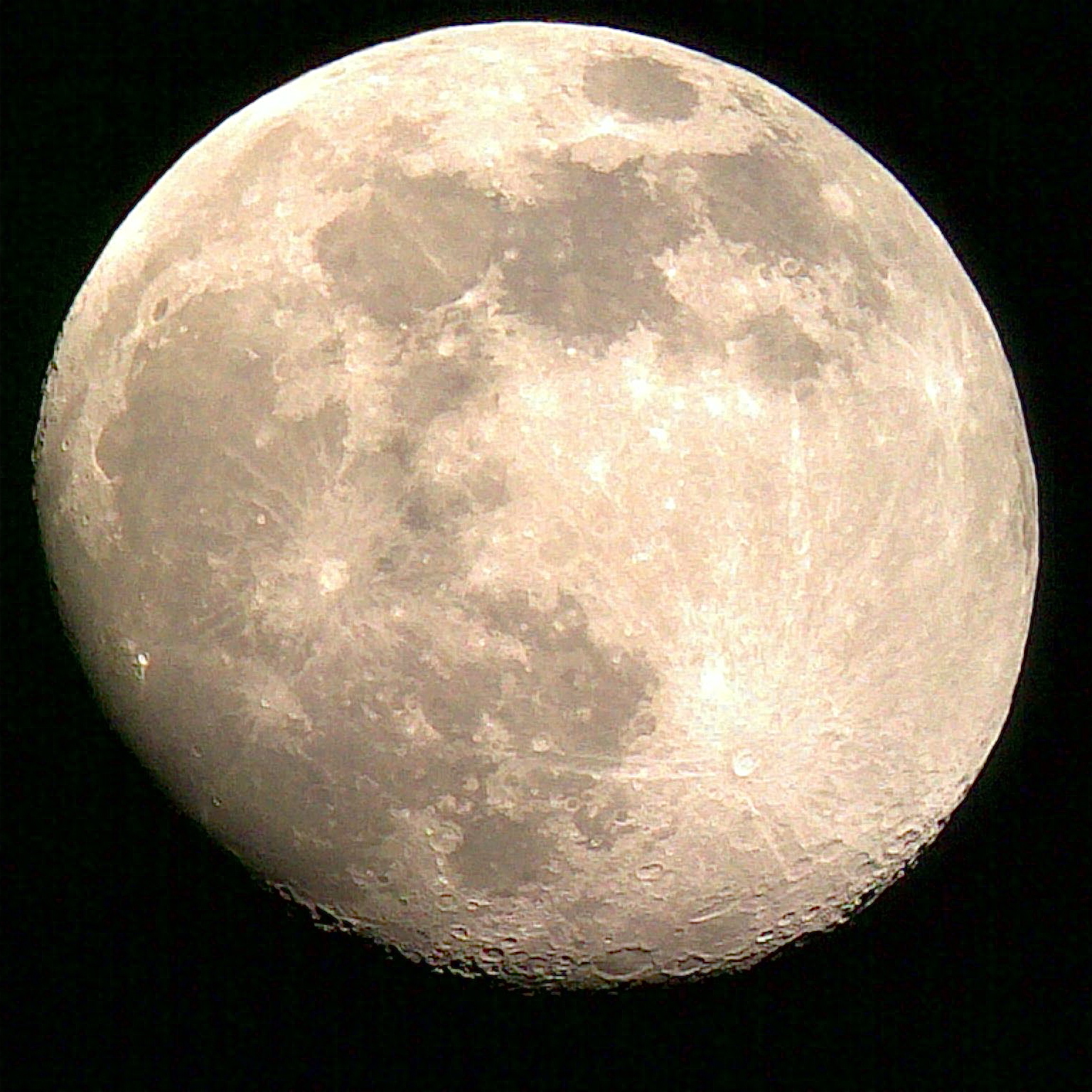
    20101118

    Cuesta College North County campus star party

    20101118775
    http://www.flickr.com/photos/waiferx/5188395513/
    Originally uploaded by Waifer X

    Waxing gibbous moon, November 18, 2010, photographed with a hand-held Nokia e71 smartphone through an Orion SkyQuest XT8 8" reflector at Cuesta College North County Campus, Paso Robles, CA.

    Sights seen:
    Waxing gibbous moon
    Jupiter, north equatorial belt, four Galilean satellites

    20101117

    Astronomy current events question: Kuiper belt object colors

    Astronomy 210L, Fall Semester 2010
    Cuesta College, San Luis Obispo, CA

    Students are assigned to read online articles on current astronomy events, and take a short current events quiz during the first 10 minutes of lab. (This motivates students to show up promptly to lab, as the time cut-off for the quiz is strictly enforced!)
    Astronomy.com editors, "Kuiper Belt of Many Colors," November 1, 2010
    http://astronomy.com/News-Observing/News/2010/11/Kuiper%20Belt%20of%20many%20colors.aspx
    Scientists from NASA's Goddard Space Flight Center have proposed that the many different colors of Kuiper belt objects may come from:
    (A) different layers exposed by the sun.
    (B) tidal heating.
    (C) sulfur-rich volcanoes and geysers.
    (D) radioactive decays.
    (E) simple organisms similar to algae or lichen.

    Correct answer: (A)

    Student responses
    Sections 70178, 70186, 70200
    (A) : 32 students
    (B) : 3 students
    (C) : 1 student
    (D) : 3 students
    (E) : 5 students

    Astronomy current events question: EPOXI spacecraft previous mission

    Astronomy 210L, Fall Semester 2010
    Cuesta College, San Luis Obispo, CA

    Students are assigned to read online articles on current astronomy events, and take a short current events quiz during the first 10 minutes of lab. (This motivates students to show up promptly to lab, as the time cut-off for the quiz is strictly enforced!)
    Astronomy.com editors, "Deep Impact Flyby Spacecraft Images Comet 103P/Hartley," November 4, 2010
    http://astronomy.com/en/News-Observing/News/2010/11/Deep%20Impact%20Flyby%20spacecraft%20images%20Comet%20103P%20Hartley.aspx
    Before flying past Comet 103P/Hartley 2, the NASA EPOXI spacecraft was originally called the Deep Impact spacecraft, which had successfully completed its mission of:
    (A) returning samples from a dark nebula.
    (B) shooting a projectile into the nucleus of another comet.
    (C) flying through the asteroid belt.
    (D) surveying the moon's surface for traces of water.
    (E) tracking and deflecting a potential asteroid impactor.

    Correct answer: (B)

    Student responses
    Sections 70178, 70186, 70200
    (A) : 1 student
    (B) : 31 students
    (C) : 4 students
    (D) : 3 students
    (E) : 5 students

    Astronomy current events question: Saturn ring debris mountains

    Astronomy 210L, Fall Semester 2010
    Cuesta College, San Luis Obispo, CA

    Students are assigned to read online articles on current astronomy events, and take a short current events quiz during the first 10 minutes of lab. (This motivates students to show up promptly to lab, as the time cut-off for the quiz is strictly enforced!)
    Annalee Newitz, "Two-Mile-High Mountains Discovered in Saturn's Rings," November 1, 2010
    http://io9.com/5678790/two+mile+high-mountains-discovered-in-saturns-rings?skyline=true&s=i
    The NASA Cassini spacecraft has recently imaged __________ in Saturn's rings, which may be caused by gravitational fluctuations between Saturn and its moons.
    (A) snow cyclones.
    (B) debris mountains.
    (C) spiral arms.
    (D) moonlet formation.
    (E) liquid nitrogen geysers.

    Correct answer: (B)

    Student responses
    Sections 70178, 70186, 70200
    (A) : 0 students
    (B) : 39 students
    (C) : 2 students
    (D) : 1 student
    (E) : 1 student

    20101107

    Astronomy current events question: subsurface water on Mars

    Astronomy 210L, Fall Semester 2010
    Cuesta College, San Luis Obispo, CA

    Students are assigned to read online articles on current astronomy events, and take a short current events quiz during the first 10 minutes of lab. (This motivates students to show up promptly to lab, as the time cut-off for the quiz is strictly enforced!)
    Guy Webster & Dwayne Brown, "NASA Trapped Mars Rover Finds Evidence of Subsurface Water," October 23, 2010
    http://www.nasa.gov/mission_pages/mer/news/mer20101028.html
    NASA's Mars Exploration Rover Spirit detected __________, which may be evidence for subsurface water on Mars.
    (A) evaporated puddles.
    (B) small and steady Marsquakes.
    (C) permafrost.
    (D) fossilized quicksand.
    (E) different composition soil layers.

    Correct answer: (B)

    Student responses
    Sections 70178, 70186, 70200
    (A) : 12 students
    (B) : 0 students
    (C) : 16 students
    (D) : 2 students
    (E) : 34 students

    Astronomy current events question: spiral galaxies in infrared light

    Astronomy 210L, Fall Semester 2010
    Cuesta College, San Luis Obispo, CA

    Students are assigned to read online articles on current astronomy events, and take a short current events quiz during the first 10 minutes of lab. (This motivates students to show up promptly to lab, as the time cut-off for the quiz is strictly enforced!)
    Astronomy.com editors, "Spiral Galaxies Stripped Bare," October 28, 2010
    http://astronomy.com/en/News-Observing/News/2010/10/Spiral%20galaxies%20stripped%20bare.aspx
    The European Southern Observatory’s (ESO) Very Large Telescope (VLT) HAWK-I camera images spiral galaxies using infrared light, which is:
    (A) not affected by spiral arm dust.
    (B) not affected by dark matter.
    (C) not affected by local light pollution.
    (D) arriving at Earth just before the galaxies collided.
    (E) slower and steadier than visible light.

    Correct answer: (A)

    Student responses
    Sections 70178, 70186, 70200
    (A) : 45 students
    (B) : 6 students
    (C) : 11 students
    (D) : 1 student
    (E) : 2 students

    Astronomy current events question: Large Binocular Telescope Interferometer

    Astronomy 210L, Fall Semester 2010
    Cuesta College, San Luis Obispo, CA

    Students are assigned to read online articles on current astronomy events, and take a short current events quiz during the first 10 minutes of lab. (This motivates students to show up promptly to lab, as the time cut-off for the quiz is strictly enforced!)
    Tom Beal, The Arizona Daily Star, "Graham Scope Has Both Eyes Open," October 23, 2010
    http://www.skyandtelescope.com/news/wires?id=151393738&c=y
    The Large Binocular Telescope Interferometer uses infrared light combined from two 8.4-meter mirrors in order to detect the presence of:
    (A) distant star parallaxes.
    (B) Earth-like planets.
    (C) previously unseen spiral galaxies.
    (D) near-Earth orbit asteroids.
    (E) close binary star systems.

    Correct answer: (B)

    Student responses
    Sections 70178, 70186, 70200
    (A) : 5 students
    (B) : 48 students
    (C) : 9 students
    (D) : 4 students
    (E) : 4 students

    20101105

    Overheard: extent of Milky Way

    Astronomy 210, Fall Semester 2010
    Cuesta College, San Luis Obispo, CA

    (Overheard following an introductory astronomy lecture-tutorial on the total vs. visible extent of the Milky Way.)

    Instructor (to class): "So why do you think we can't see most of our Milky Way?"

    Student 1: "Because it's so huge."

    Instructor: "Then how it is possible that we can see distant galaxies outside the Milky Way?"

    (Beat.)

    Student 2: "Uh...because they're huge, too?"

    20101101

    Astronomy current events question: Moon south pole frozen water

    Astronomy 210L, Fall Semester 2010
    Cuesta College, San Luis Obispo, CA

    Students are assigned to read online articles on current astronomy events, and take a short current events quiz during the first 10 minutes of lab. (This motivates students to show up promptly to lab, as the time cut-off for the quiz is strictly enforced!)
    University of Arizona-Tucson press release, Astronomy.com editors, "It's Cold and Wet at the Moon's South Pole?," October 22, 2010
    http://www.astronomy.com/en/News-Observing/News/2010/10/It%20is%20cold%20and%20wet%20at%20the%20Moons%20south%20pole.aspx
    By collecting neutrons from the moon's surface, the NASA Lunar Reconnaissance Orbiter observed evidence of:
    (A) solar flare damage.
    (B) helium-3 and other potential fusion fuels.
    (C) moonquakes.
    (D) radioactivity.
    (E) frozen water.

    Correct answer: (E)

    Student responses
    Sections 70178, 70186, 70200
    (A) : 1 student
    (B) : 5 students
    (C) : 1 student
    (D) : 1 student
    (E) : 52 students

    Astronomy current events question: planet OGLE-TR-113b orbit shrinking

    Astronomy 210L, Fall Semester 2010
    Cuesta College, San Luis Obispo, CA

    Students are assigned to read online articles on current astronomy events, and take a short current events quiz during the first 10 minutes of lab. (This motivates students to show up promptly to lab, as the time cut-off for the quiz is strictly enforced!)
    Kelly Beatty, "Watching a Planet's Death Spiral?," October 12, 2010
    http://www.skyandtelescope.com/news/104782104.html
    __________ is evidence that the orbit of planet OGLE-TR-113b is shrinking.
    (A) Timing of its transits.
    (B) Infrared observations of its hot spot.
    (C) Tidal locking.
    (D) A massive, yet-unseen companion.
    (E) Exchange of tidal energy.

    Correct answer: (A)

    Student responses
    Sections 70178, 70186, 70200
    (A) : 25 students
    (B) : 6 students
    (C) : 4 students
    (D) : 2 student
    (E) : 14 students

    Astronomy current events question: upsilon Andromeda b hot spot

    Astronomy 210L, Fall Semester 2010
    Cuesta College, San Luis Obispo, CA

    Students are assigned to read online articles on current astronomy events, and take a short current events quiz during the first 10 minutes of lab. (This motivates students to show up promptly to lab, as the time cut-off for the quiz is strictly enforced!)
    Whitney Clavin, "Astronomers Find Weird, Warm Spot on an Exoplanet," October 19, 2010
    http://www.nasa.gov/mission_pages/spitzer/news/spitzer20101019.html
    The side of the planet upsilon Andromeda b that always faces its star is unusual because it is:
    (A) experiencing a perpetual sunset.
    (B) potentially habitable.
    (C) not the hottest side of the planet.
    (D) geologically dead.
    (E) lacking water, methane, carbon dioxide and carbon monoxide.

    Correct answer: (C)

    Student responses
    Sections 70178, 70186, 70200
    (A) : 4 students
    (B) : 2 students
    (C) : 50 students
    (D) : 1 student
    (E) : 1 student