Astronomy 210 Midterm 1, spring semester 2019
Cuesta College, San Luis Obispo, CA

Shown at right is a photographic montage[*] of the moon, observed by a person on a sand dune, with the sun low in the sky somewhere beyond the right edge of the photograph. Discuss why this composition is not plausible. Support your answer using a diagram showing the positions of the sun, moon, Earth, and an observer on Earth.
[*]
instagram.com/p/Bq0oQ9PHlK9.
Solution and grading rubric:
- p:
Complete diagram and reasoning, using one of the following
explanations:- identifies the moon as a waning gibbous (due to slightly more than the
left side of the moon being illuminated), at or very nearly overhead at
or just before 3 AM, which is inconsistent with the sky still
illuminated by the sun "low in the sky" sometime during daylight hours
(after 6 AM to before 6 PM); or
- identifies the moon as third quarter, which is overhead at 6 AM, argues
that is too early for the sun to already be rising "low in the sky,"
but does not recognize the inconsistency in lighting; or
- recognizing that the moon as shown is illuminated from a light source
from the left, which is inconsistent with the sun being low in the sky
"somewhere beyond the right edge of the photograph."
- r:
Nearly correct (explanation weak, unclear or only nearly complete); includes extraneous/tangential information; or has minor errors. May make one
of the following explanations:- since this is just before sunset (without discussing possibility that
this may be just after sunrise), argues how a waning gibbous moon would
not be visible then until rising later at 9 PM, when it is dark; or
- misidentifies the moon as waxing gibbous, at or very nearly
overhead at 9 PM, which is inconsistent with the sky still illuminated
by the sun "low in the sky" sometime during daylight hours (after 6 AM
to before 6 PM).
- t:
Contains right ideas, but discussion is unclear/incomplete or
contains major errors. Primarily discusses waning crescent moon being overhead.
- v:
Limited relevant discussion of supporting evidence of at least some
merit, but in an inconsistent or unclear manner. At least attempts to draw a
moon phase diagram and apply rise/overhead/set times.
- x:
Implementation/application of ideas, but credit given for effort rather than merit. Discussion not clearly based on a moon phase diagram.
- y:
Irrelevant discussion/effectively blank.
- z:
Blank.
Grading distribution:
Section 30674
Exam code: midterm01NtwT
p: 27 students
r: 3 students
t: 1 student
v: 3 students
x: 0 students
y: 0 students
z: 1 student
Section 30676
Exam code: midterm01SFBk
p: 23 students
r: 11 students
t: 6 students
v: 3 students
x: 1 student
y: 0 students
z: 0 students
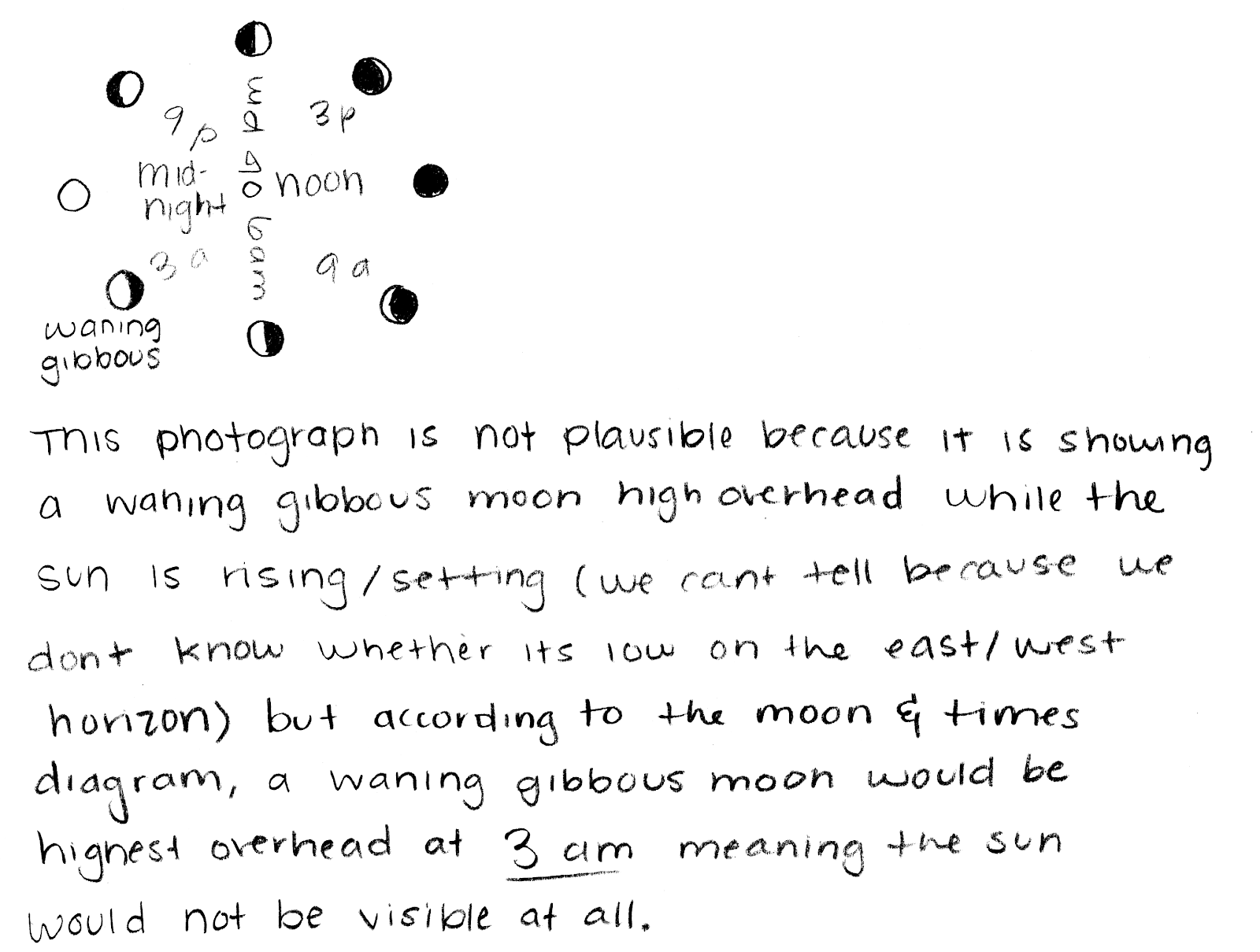
A sample "p" response (from student 2005), discussing that the sun would not be out in the sky when the waning gibbous moon is high overhead:
Another sample "p" response (from student 2517), observing that the wrong side of the moon is illuminated:

Another sample "p" response (from student 7563), making both arguments mentioned above:

A sample "r" response (from student 1377), only discussing how the waning gibbous moon would not be visible at sunset:

Another sample "r" response (from student 1106), instead identifying this as a waxing gibbous moon, which would not be high overhead during daylight hours:


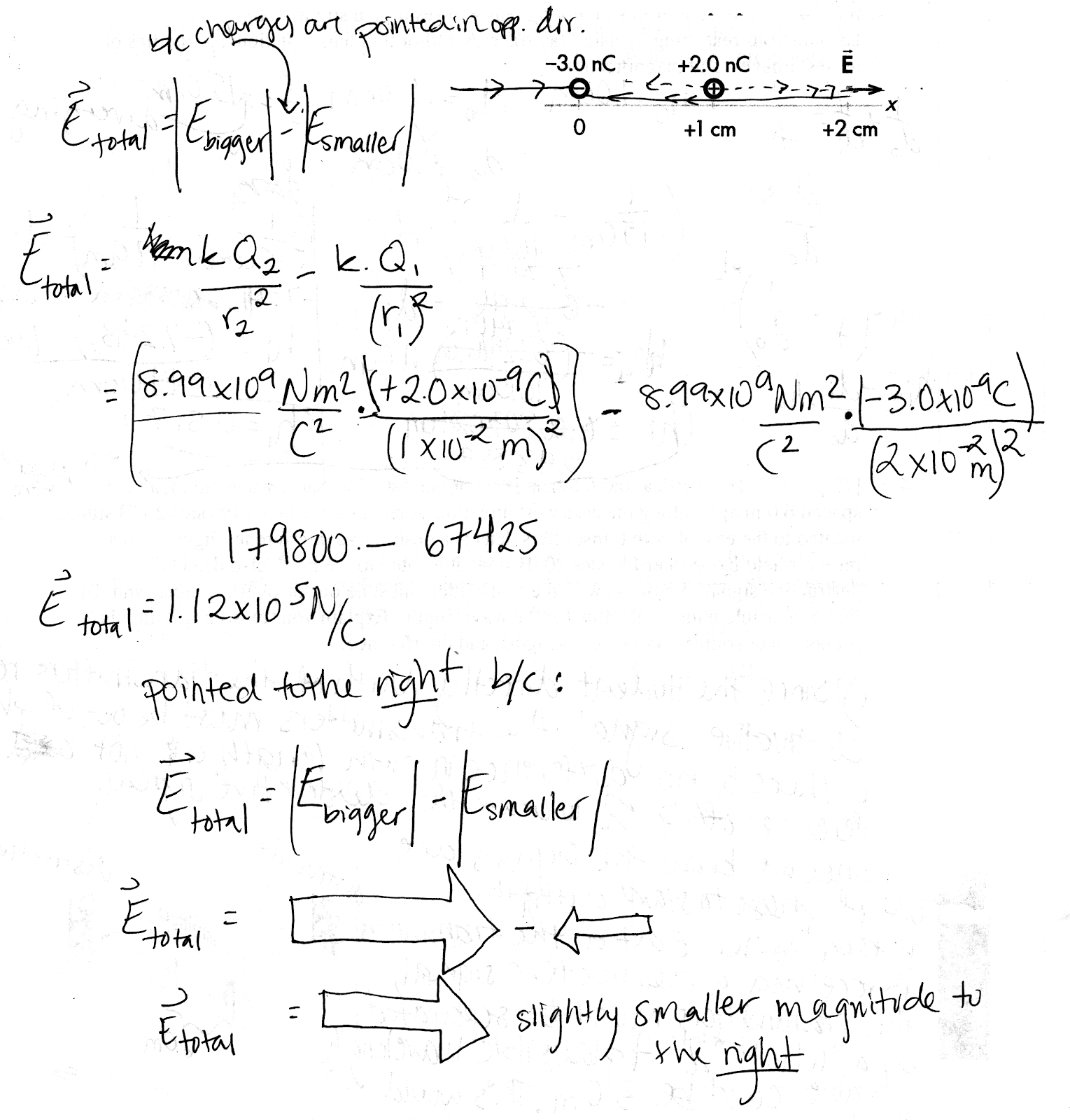
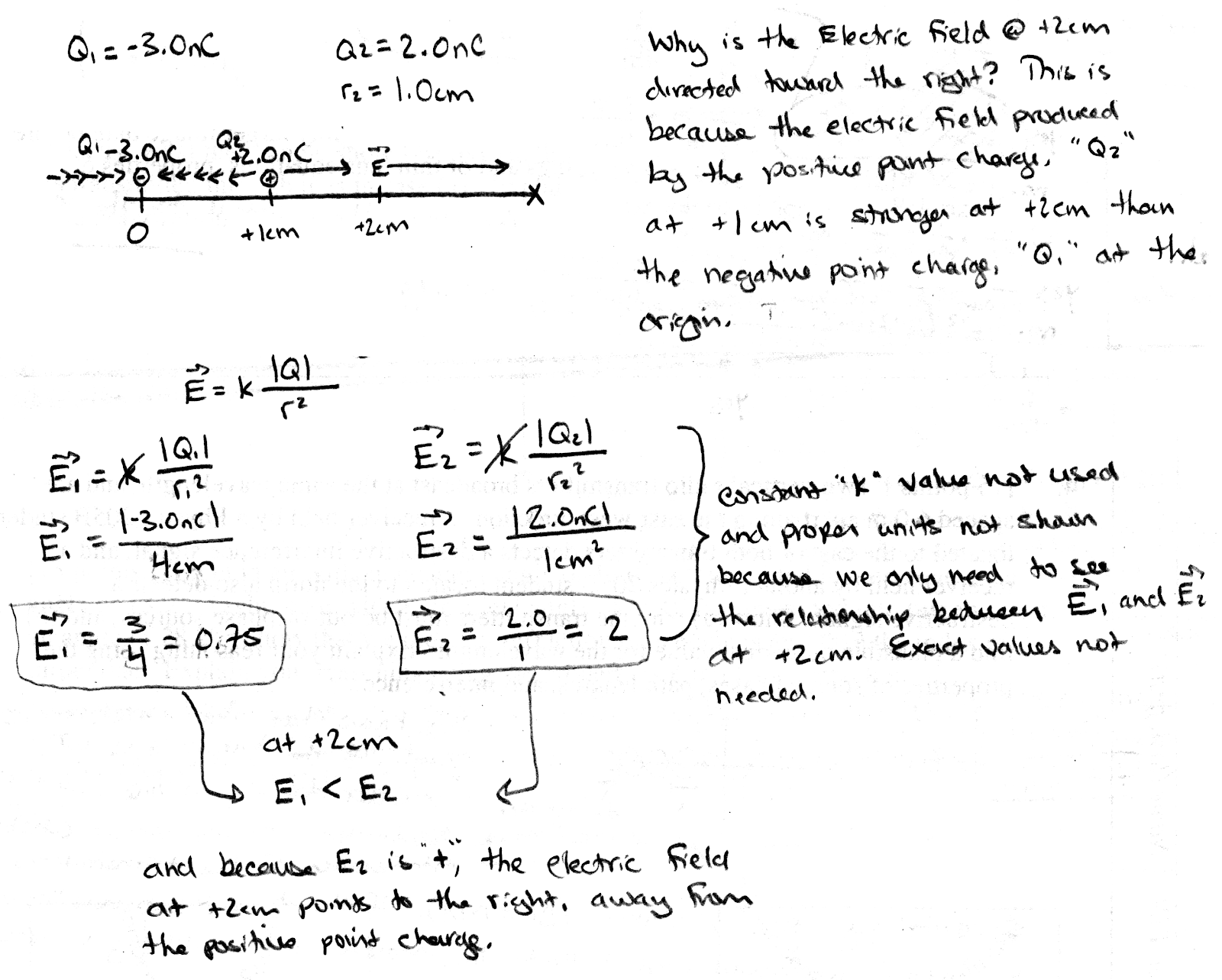
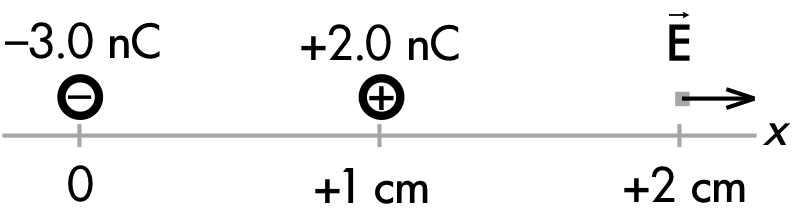 A –3.0 nC point charge is held at the origin, and +2.0 nC point charge is held at x = +1 cm. Discuss why the electric field at x = +2 cm is directed to the right. Explain your reasoning using properties of electric forces, fields, and vector superposition.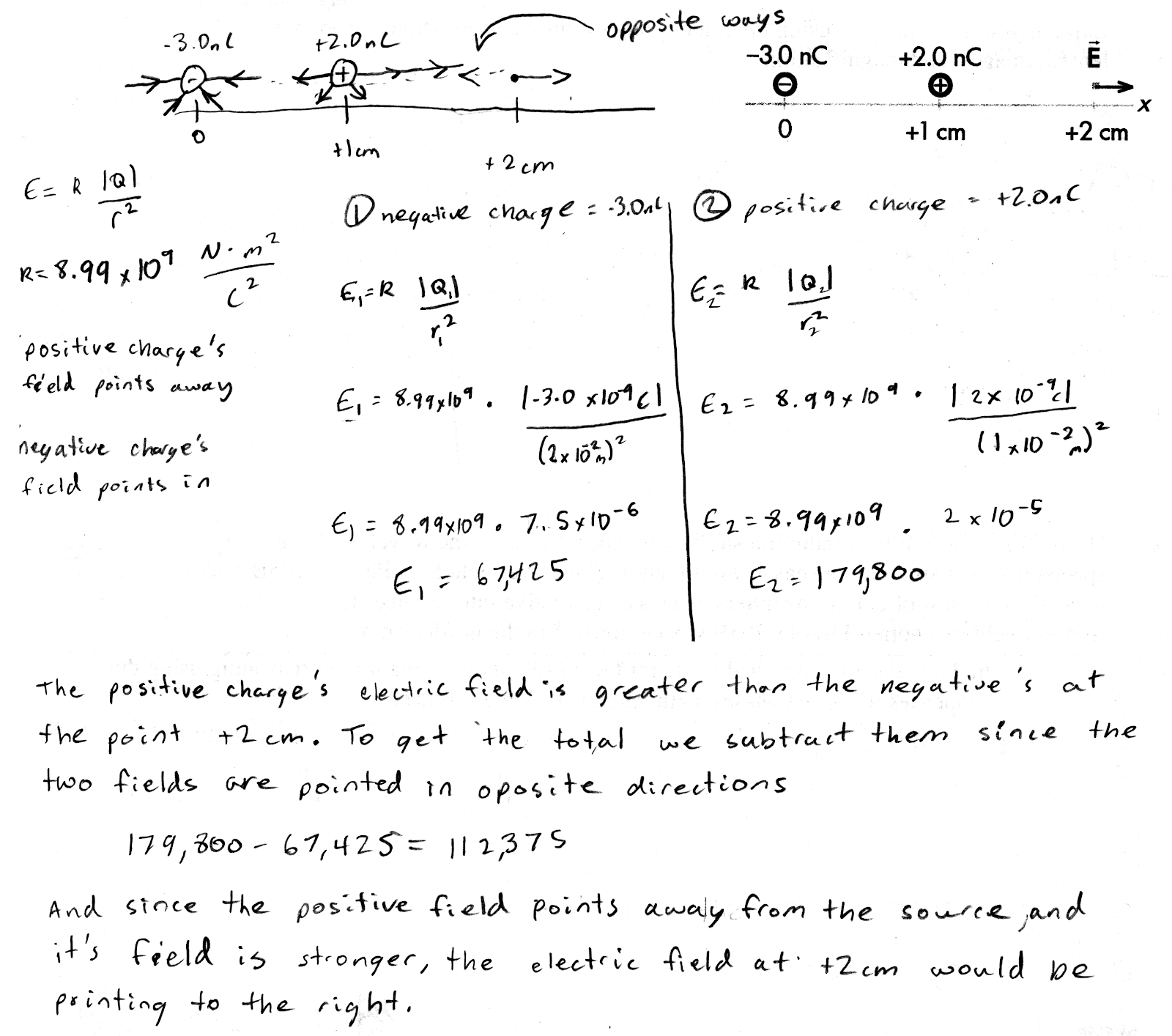


 Shown at right is a comic strip[*] published on March 27, 1994. Determine a plausible time for an observer in San Luis Obispo, CA to be able to see both the constellation Cassiopeia and the constellation Orion somewhere in the night sky on this date, or discuss why this comic strip is not plausible. Defend your answer by clearly explaining how you used your starwheel to do this, along with any assumptions that you may have made.


 Shown at right is a photographic montage[*] of the moon, observed by a person on a sand dune, with the sun low in the sky somewhere beyond the right edge of the photograph. Discuss why this composition is not plausible. Support your answer using a diagram showing the positions of the sun, moon, Earth, and an observer on Earth.


