20101208

Found physics: joule thief

"101114-1200240"
Waifer X
flic.kr/p/8UVKH3

Joule thief (wki.pe/Joule_thief), built with Radio Shack parts and a mint tin, circuit diagram based on Make magazine's how-to tutorial (makezine.com/2007/11/02/make-a-joule-thief-weeken-1/).

20101207

Astronomy current events question: extra-galactic planet

Astronomy 210L, Fall Semester 2010
Cuesta College, San Luis Obispo, CA

Students are assigned to read online articles on current astronomy events, and take a short current events quiz during the first 10 minutes of lab. (This motivates students to show up promptly to lab, as the time cut-off for the quiz is strictly enforced!)
Alan MacRobert, "Planet from Another Galaxy," November 18, 2010
http://www.skyandtelescope.com/news/108739724.html
Astronomers were able to determine that the star HIP 13044 and its orbiting planet may have come from beyond the Milky Way galaxy by analyzing their:
(A) trajectory.
(B) metallicity.
(C) gravitational wobbles.
(D) orbital motion.
(E) absorption and emission spectra.

Correct answer: (A)

Student responses
Sections 70178, 70186, 70200
(A) : 5 students
(B) : 10 students
(C) : 8 students
(D) : 4 students
(E) : 3 students

20101206

Astronomy current events question: Rhea's thin atmosphere

Astronomy 210L, Fall Semester 2010
Cuesta College, San Luis Obispo, CA

Students are assigned to read online articles on current astronomy events, and take a short current events quiz during the first 10 minutes of lab. (This motivates students to show up promptly to lab, as the time cut-off for the quiz is strictly enforced!)
Jia-Rui C. Cook, "Thin Air--Cassini Finds Ethereal Atmosphere at Rhea," November 26, 2010
http://www.nasa.gov/mission_pages/cassini/whycassini/cassini20101126.html
The NASA Cassini spacecraft has detected a thin atmosphere around Saturn's moon Rhea, containing oxygen that may be released from:
(A) pockets containing pristine solar nebula gas.
(B) high energy particles bombarding its icy surface.
(C) subsurface organisms capable of photosynthesis.
(D) chemical processes that may eventually evolve into life.
(E) radioactive decay processes.

Correct answer: (B)

Student responses
Sections 70178, 70186, 70200
(A) : 4 students
(B) : 22 students
(C) : 7 students
(D) : 14 students
(E) : 8 students

20101205

Astronomy current events question: Jupiter's south equatorial belt

Astronomy 210L, Fall Semester 2010
Cuesta College, San Luis Obispo, CA

Students are assigned to read online articles on current astronomy events, and take a short current events quiz during the first 10 minutes of lab. (This motivates students to show up promptly to lab, as the time cut-off for the quiz is strictly enforced!)
Emily Lakdawalla, "Jupiter's Outbreak is Spreading," November 22, 2010
http://planetary.org/blog/article/00002784/
Amateur astronomers have been observing recent rapid changes in Jupiter's:
(A) two moons that may soon collide.
(B) polar ice caps.
(C) lightning storms.
(D) magnetic field.
(E) weather patterns.

Correct answer: (E)

Student responses
Sections 70178, 70186, 70200
(A) : 0 students
(B) : 1 student
(C) : 0 students
(D) : 5 students
(E) : 20 students

20101125

Found physics: turkey cooling

"...Imagine what would happen if you took a Thanksgiving turkey piping hot from the oven and immediately placed it in a freezer. (Consider a perfect freezer--one that can remove heat instantly and always stay at its set temperature.) Initially the turkey would be at the same temperature throughout (assuming that you had roasted it for sufficiently long). Only a very thin skin would immediately take on the temperature of the freezer. But soon, the outer layers of turkey meat would cool as heat diffused outward, even though the center retained its initial oven-like temperature. Eventually, of course, everything including the stuffing would cool off; that is, the temperature inside your turkey would depend both on the distance from the surface and on the time elapsed since you placed it in the freezer."
--Philip C. England, Peter Molnar, and Frank M. Richter, "Kelvin, Perry and the Age of the Earth," American Scientist, volume 95 number 4, p. 342 (2007)
Previous post:
  • The "Turkey/Cornish Hen Effect".

    Related posts:
  • Bergman's Rule (wikipedia.org).
  • Allen's Rule (wikipedia.org).
  • 20101123

    Astronomy current events question: Milky Way bubbles

    Astronomy 210L, Fall Semester 2010
    Cuesta College, San Luis Obispo, CA

    Students are assigned to read online articles on current astronomy events, and take a short current events quiz during the first 10 minutes of lab. (This motivates students to show up promptly to lab, as the time cut-off for the quiz is strictly enforced!)
    Kelly Beatty, "Why is the Milky Way Blowing Bubbles?," November 11, 2010
    http://www.skyandtelescope.com/community/skyblog/newsblog/107302599.html
    Images of __________ above and below the Milky Way have been extracted from NASA Fermi Large Area Telescope data.
    (A) dark matter.
    (B) antimatter vortexes.
    (C) disrupted dwarf galaxies.
    (D) rogue black holes.
    (E) gamma-ray bubbles.

    Correct answer: (E)

    Student responses
    Sections 70178, 70186, 70200
    (A) : 6 students
    (B) : 1 student
    (C) : 8 students
    (D) : 2 students
    (E) : 46 students

    Astronomy current events question: gas-powered comet jets

    Astronomy 210L, Fall Semester 2010
    Cuesta College, San Luis Obispo, CA

    Students are assigned to read online articles on current astronomy events, and take a short current events quiz during the first 10 minutes of lab. (This motivates students to show up promptly to lab, as the time cut-off for the quiz is strictly enforced!)
    Astronomy.com editors, "Primordial Dry Ice Fuels Comet Jets," November 11, 2010
    http://astronomy.com/en/News-Observing/News/2010/11/Cometary%20dry%20ice%20jet%20fuel.aspx
    The NASA EPOXI spacecraft observed jets of gas and particles powered by __________ bursting from Comet 103P/Hartley 2.
    (A) oxygen.
    (B) water vapor.
    (C) nitrogen.
    (D) carbon dioxide.
    (E) methane.

    Correct answer: (D)

    Student responses
    Sections 70178, 70186, 70200
    (A) : 0 students
    (B) : 9 students
    (C) : 10 students
    (D) : 43 students
    (E) : 2 students

    Astronomy current events question: Eris vs. Pluto

    Astronomy 210L, Fall Semester 2010
    Cuesta College, San Luis Obispo, CA

    Students are assigned to read online articles on current astronomy events, and take a short current events quiz during the first 10 minutes of lab. (This motivates students to show up promptly to lab, as the time cut-off for the quiz is strictly enforced!)
    Kelly Beatty, "Eris Gets Dwarfed (Is Pluto Bigger?)," November 7, 2010
    http://www.skyandtelescope.com/news/106861063.html
    Astronomers in Chile recently observed dwarf planet Eris __________, which may indicate that it is slightly smaller than dwarf planet Pluto.
    (A) passing in front of a star.
    (B) during a continent-wide power outage.
    (C) eclipsed by Pluto.
    (D) using infrared and radio waves.
    (E) bombarded by an impactor.

    Correct answer: (A)

    Student responses
    Sections 70178, 70186, 70200
    (A) : 51 students
    (B) : 2 students
    (C) : 8 students
    (D) : 2 students
    (E) : 1 student

    20101118

    Cuesta College North County campus star party

    20101118775
    http://www.flickr.com/photos/waiferx/5188395513/
    Originally uploaded by Waifer X

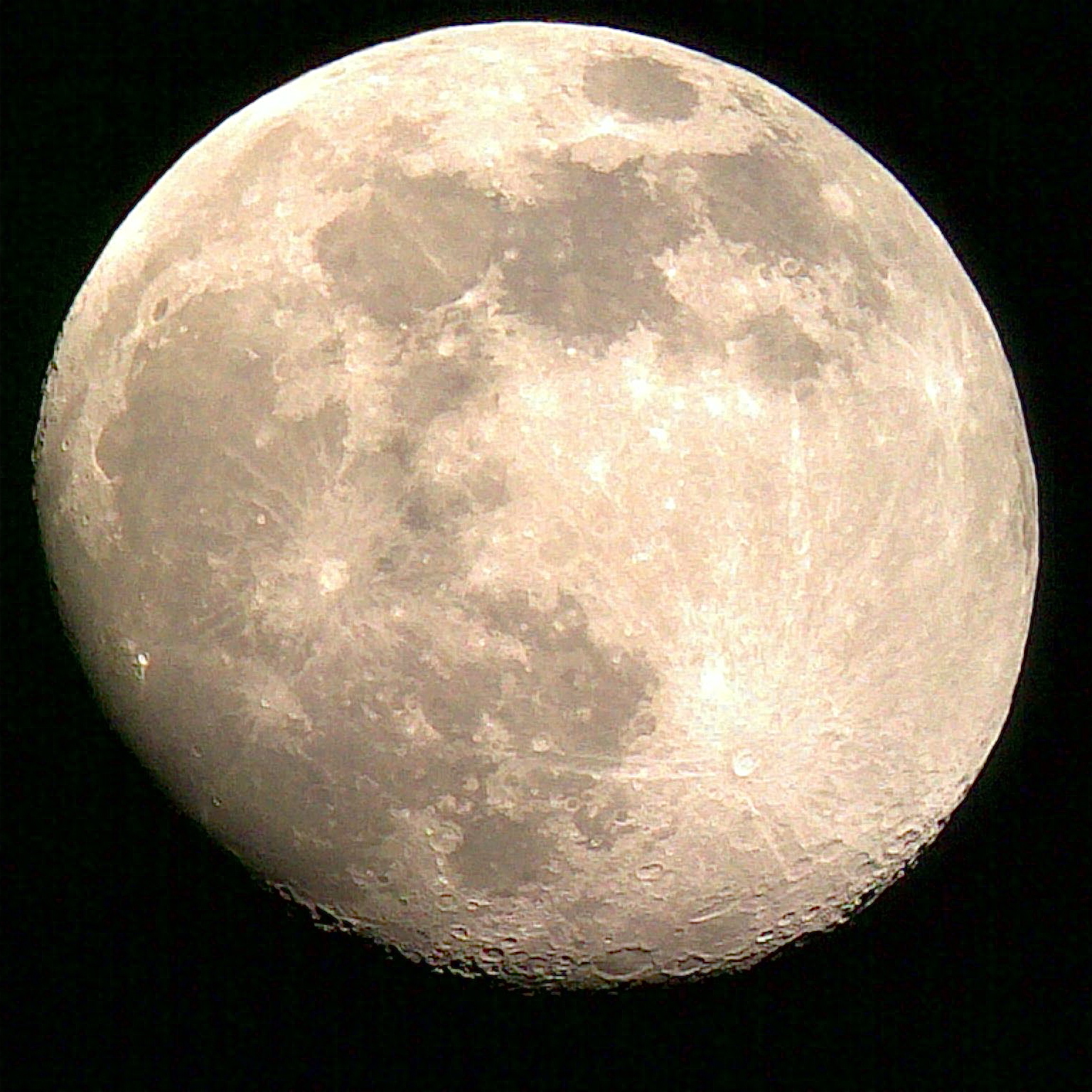
    Waxing gibbous moon, November 18, 2010, photographed with a hand-held Nokia e71 smartphone through an Orion SkyQuest XT8 8" reflector at Cuesta College North County Campus, Paso Robles, CA.

    Sights seen:
    Waxing gibbous moon
    Jupiter, north equatorial belt, four Galilean satellites

    20101117

    Astronomy current events question: Kuiper belt object colors

    Astronomy 210L, Fall Semester 2010
    Cuesta College, San Luis Obispo, CA

    Students are assigned to read online articles on current astronomy events, and take a short current events quiz during the first 10 minutes of lab. (This motivates students to show up promptly to lab, as the time cut-off for the quiz is strictly enforced!)
    Astronomy.com editors, "Kuiper Belt of Many Colors," November 1, 2010
    http://astronomy.com/News-Observing/News/2010/11/Kuiper%20Belt%20of%20many%20colors.aspx
    Scientists from NASA's Goddard Space Flight Center have proposed that the many different colors of Kuiper belt objects may come from:
    (A) different layers exposed by the sun.
    (B) tidal heating.
    (C) sulfur-rich volcanoes and geysers.
    (D) radioactive decays.
    (E) simple organisms similar to algae or lichen.

    Correct answer: (A)

    Student responses
    Sections 70178, 70186, 70200
    (A) : 32 students
    (B) : 3 students
    (C) : 1 student
    (D) : 3 students
    (E) : 5 students