20130417

Astronomy current events quiz: white dwarf and red dwarf binary system

Astronomy 210L, spring semester 2013
Cuesta College, San Luis Obispo, CA

Students are assigned to read online articles on current astronomy events, and take a short current events quiz during the first 10 minutes of lab. (This motivates students to show up promptly to lab, as the time cut-off for the quiz is strictly enforced!)
Whitney Clavin, "Gravity-Bending Find Leads to Kepler Meeting Einstein," April 4, 2013
http://www.jpl.nasa.gov/news/news.php?release=2013-124
NASA's Kepler space telescope detected a white dwarf in a binary star system with a red dwarf by observing __________ as they pass in front of and behind each other.
(A) solar flares.
(B) x-ray pulses.
(C) brightness changes.
(D) repeated nova explosions.
(E) magnetic field fluctuations.

Correct answer: (C)

Student responses
Sections 30678, 30679, 30680
(A) : 3 students
(B) : 6 student
(C) : 24 student
(D) : 2 students
(E) : 18 students

Astronomy current events question: Io's volcano locations

Astronomy 210L, spring semester 2013
Cuesta College, San Luis Obispo, CA

Students are assigned to read online articles on current astronomy events, and take a short current events quiz during the first 10 minutes of lab. (This motivates students to show up promptly to lab, as the time cut-off for the quiz is strictly enforced!)
Jia-Rui C. Cook, Nancy Neal-Jones, Bill Steigerwald, "Scientists to Io: Volcanoes are in the Wrong Spot," April 4, 2013
http://www.jpl.nasa.gov/news/news.php?release=2013-125
According to NASA and European Space Agency researchers, __________ on Jupiter's moon, Io, are displaced from positions expected from tidal heating.
(A) hydrocarbon lakes.
(B) polar ice caps.
(C) lightning storms.
(D) volcanoes.
(E) subduction zones.

Correct answer: (D)

Student responses
Sections 30678, 30679, 30680
(A) : 2 students
(B) : 1 student
(C) : 0 student
(D) : 49 students
(E) : 1 student

Astronomy current events question: hydrogen peroxide on Europa

Astronomy 210L, spring semester 2013
Cuesta College, San Luis Obispo, CA

Students are assigned to read online articles on current astronomy events, and take a short current events quiz during the first 10 minutes of lab. (This motivates students to show up promptly to lab, as the time cut-off for the quiz is strictly enforced!)
Jia-Rui C. Cook, "Mapping the Chemistry Needed for Life at Europa," April 4, 2013
http://www.jpl.nasa.gov/news/news.php?release=2013-126
Analysis of near-infrared data from the Keck II telescope confirmed the presence of __________, a potential energy source for life on Jupiter's moon, Europa.
(A) hydrocarbons.
(B) adenosine triphosphate (ATP).
(C) hydrogen peroxide.
(D) radioactive nuclides.
(E) chlorophyll.

Correct answer: (C)

Student responses
Sections 30678, 30679, 30680
(A) : 5 students
(B) : 2 students
(C) : 43 student
(D) : 2 students
(E) : 1 student

20130416

Online reading assignment: magnetic fields of current-carrying wires and loops

Physics 205B, spring semester 2013
Cuesta College, San Luis Obispo, CA

Students have a weekly online reading assignment (hosted by SurveyMonkey.com), where they answer questions based on reading their textbook, material covered in previous lectures, opinion questions, and/or asking (anonymous) questions or making (anonymous) comments. Full credit is given for completing the online reading assignment before next week's lecture, regardless if whether their answers are correct/incorrect. Selected results/questions/comments are addressed by the instructor at the start of the following lecture.

The following questions were asked on reading textbook chapters and previewing presentations on magnetic fields of current-carrying wires and loops.

Selected/edited responses are given below.

Describe something you found interesting from the assigned textbook reading or presentation preview, and explain why this was personally interesting for you.
"The movie is awesome! I wish the human eye could see magnetic fields like that, although that might be a little distracting."

"Being able to use my fingers to predict which direction the current, magnetic field, or force is going."

"It was interesting how the iron filings aligned themselves with the magnetic field."

"I found many of the concepts hard to picture, so I don't think I have enough insight to find anything too interesting."
Describe something you found confusing from the assigned textbook reading or presentation preview, and explain why this was personally confusing for you.
"Using the hand rules for cross products--I'm thinking the textbook just overcomplicates it."

"The third right-hand rule is giving me a little trouble. it says your thumb points in the direction of the magnetic field in the interior of the loop, I'm having some trouble visualizing how to move my hand."

"I get confused on when to use a right-hand rule and a left-hand rule."

"Its interesting that the magnetic field in a closed loop is so concentrated in the center of the loop; I suppose that is similar to a bar magnet in that the lines are closest near the magnet but for each line in the center, doesn't there have to be just as many farther out?"

"Even though it isn't confusing when reading about it on your blog, I have a feeling I am going to get easily confused when trying to determine which right-hand rule to use on any given problem!"
Explain the similarities/differences between a circular current loop, and a solenoid.
"The similarities are that the magnetic field lines are concentrated within the loop or loops of wire and so a solenoid is like a series of circular loops. The difference is that a solenoid magnetic field is not dependent upon the radius of the apparatus as seen with a loop of wire."
Ask the instructor an anonymous question, or make a comment. Selected questions/comments may be discussed in class.
"The magnetic field of a solenoid and a loop do still make closed loops, right?" (Yes.)

"Will you explain the difference between the circular current loop and a solenoid?" (Will do.)

Online reading assignment: cosmology (SLO campus)

Astronomy 210, spring semester 2013
Cuesta College, San Luis Obispo, CA

Students have a weekly online reading assignment (hosted by SurveyMonkey.com), where they answer questions based on reading their textbook, material covered in previous lectures, opinion questions, and/or asking (anonymous) questions or making (anonymous) comments. Full credit is given for completing the online reading assignment before next week's lecture, regardless if whether their answers are correct/incorrect. Selected results/questions/comments are addressed by the instructor at the start of the following lecture.

The following questions were asked on reading textbook chapters and previewing presentations on evidence for the big bang, and models of the early big bang.

Selected/edited responses are given below.

Describe something you found interesting from the assigned textbook reading or presentation preview, and explain why this was personally interesting for you.
"The acceleration of the universe because I have a personal theory to the origin of existence that uses this as key evidence."

"The history of the big bang and how it developed was really cool because I didn't realize how freaking long it took just to form galaxies, stars, etc."

"Personally I found reading about the Hubble law interesting...how they tried to come up with a concept that explains the size and age of the universe...claiming almost all galaxies appear to be moving away from us."

"I think its interesting that astronomy is full of recently found information. it seems like a pretty new branch of science. There are new things discovered all the time. It must be pretty rad to have the best job security as an astronomer."

"That a lot of stars are dead now but we can still see their light."

"I thought it was interesting learning about the big bang, because I believe that God created Earth. But I am still curious and open about other people's theories."

"That the universe has no edges it is infinite and there is no center, this is just insane to try to imagine."

"I found it interesting because I wasn't aware that the big bang didn't occur at a single place, but filled the entire volume of the universe."

"Olbers' paradox is interesting to me because of how the night sky should apparently be incredibly bright! Of course he was wrong but for Olbers' time he had something there."
Describe something you found confusing from the assigned textbook reading or presentation preview, and explain why this was personally confusing for you.
"Olber's paradox."

"Differences between antimatter, dark matter, and matter. I've read the difference a dozen times but I can always hear it again. And the difference between an open, closed, and flat universe... I wonder if astronomer's are over-thinking things sometimes when the solution is sometimes apparent to even a child."

"It's a little hard for me to wrap my head around how the big bang 'occurred everywhere.'"

"'Edge in time, not space.'"

"I did not understand the 'wall of light.'"

"I was a little confused by the video."

"I'm still a little unsure what caused the big bang to happen."

"How are you looking back in time when you look at space at a great distance? Or is that just a metaphor?"

"Nothing at all."
Briefly explain how it is possible for you to see a star in tonight's sky that may have already died a long time ago.
"Since we're so far away from the star it takes years for the light to reach us."
Describe what will happen when a matter particle and an antimatter particle meet each other.
"They destroy each other and release photons in the form of gamma rays."
Ask the instructor an anonymous question, or make a comment. Selected questions/comments may be discussed in class.
"If space/time is infinite, then why is our universe only 14 billion years old? Are we just really lucky to exist, or do we participate in an infinite universe cycle?" (Space (the size of the universe) is understood to be infinite, but time (the age of the universe) is finite.)

"What happens when there's more antimatter than matter?" (Then everything today would be made of antimatter rather than matter.)

"The big bang was probably the most fun part of this class to read about so far." (Cool. Cool cool cool.)

"Since Christianity does not teach the big bang theory, are most astronomers non-Christian or do those believers just have to have an open mind and accept the theories of the big bang?" (The big bang was originally proposed by a Catholic priest.)

"The Madonna Inn has good apple pie and coffee." (Damn straight.)

Backwards faded scaffolding laboratory/presentation: assessment case studies (revised)

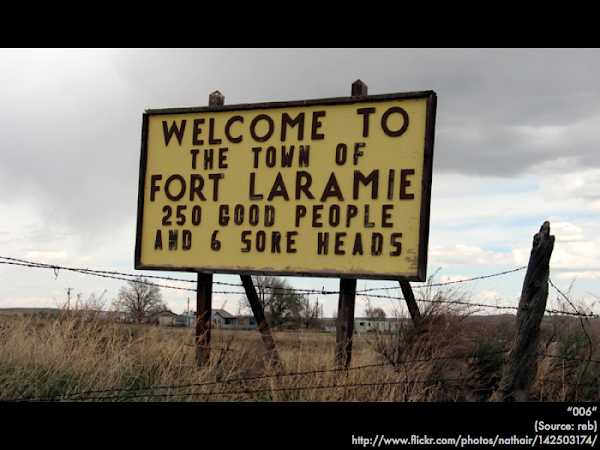
Yes, welcome back to Laramie, WY. You know what we'll be doing for today's laboratory...

...but instead of the assessment of research reports from University of Wyoming students, we'll be taking a look at research reports from actual Cuesta College students, so be nice to them.

(This is the twelfth Astronomy 210L laboratory at Cuesta College, San Luis Obispo, CA. This course is a one-semester, optional adjunct laboratory to the Astronomy 210 introductory astronomy lecture, taken primarily by students to satisfy their general education science transfer requirement.)

As from the previous case studies assessment laboratory, you will review and critique three student research reports...

...and subsequently choose one of the these research reports to revise, and present on whiteboards. This will be the last laboratory where you will be working in groups, as in the next laboratory you will be starting on your final individual research projects, to be presented individually at the last laboratory of this semester. More details on that later.

1. Research Report: Impact Craters
  1. Specific Research Question: "How does the depth of an object dropped in baking soda change as the drop height changes?"

  2. Step-By-Step Procedure to Collect Evidence:
    1. Get bowl of baking soda, steel ball, meter stick and two rulers.
    2. Drop ball of heights of 10 cm to 100 cm, three drops each height, increasing drop heights by 10 cm.
    3. Record data on a graph. Buried depth of object is defined to be full height of ball minus the height of ball showing above the surface.
    4. Draw conclusion(s) from data recorded.

  3. Data Table and/or Results:
    Impactor
    height (cm):    
    Impactor
    energy (kiloergs):    

    Crater depths (cm):    
    Average
    crater depth (cm):
      10 cm  668 kiloergs1, 1, 1 cm 1 cm
      20 cm1,396 kiloergs1.25, 1.25, 1.25 cm1.25 cm
      30 cm2,004 kiloergs1.5, 1.5, 1.5 cm1.5 cm
      40 cm2,672 kiloergs2, 2, 2 cm2 cm
      50 cm3,340 kiloergs2, 2, 2.1 cm2.03 cm
      60 cm4,009 kiloergs2, 2.3, 2.1 cm2.2 cm
      70 cm4,676 kiloergs2.4, 2, 2.2 cm2.2 cm
      80 cm5,344 kiloergs2.2, 2.3, 2.4 cm2.3 cm
      90 cm6,012 kiloergs2.3, 2.4, 2.4 cm2.37 cm
    100 cm6,680 kiloergs2.4, 2.3, 2.4 cm2.37 cm

  4. Evidence-Based Conclusion Statement: The data shows that the higher the drop height of the ball, the deeper the depth of the crater is. We observed that from drop heights of 70 cm to 100 cm, the depth roughly stayed the same.
2. Research Report: Investigating Extrasolar Planets
  1. Specific Research Question: "What percentage of terrestrial exoplanets are closest to Earth's mass?"

  2. Step-By-Step Procedure to Collect Evidence: Go to http://exoplanets.org.
    1. Click on "Plots" and choose "Histogram Plot."
    2. Type in "A[au]" for the y-axis to plot the semi-major axis.
    3. Type in "MASS[mearth]" to plot the planet's mass for the x-axis.
    4. Set "Min" to 0 and "Max" to 3 for the x-axis.
    5. Set "Min" to 0 and "Max" to 30 for the y-axis.

  3. Data Table and/or Results: (See histogram graph at right.)

  4. Evidence-Based Conclusion Statement: The majority of exoplanets that are closest to Earth's mass are smaller than the mass of Earth. 83.9% of terrestrial exoplanets are smaller than Earth's mass.
3. Research Report: Exploring GalaxyZoo
  1. Specific Research Question: "How do colors affect spiral versus elliptical galaxies?"

  2. Step-By-Step Procedure to Collect Evidence: Use http://zoo1.galaxyzoo.org/ to make observations.
    1. Click on "Galaxy Analysis" tab.
    2. Go through 100 color pictures of identifiable galaxies.
    3. Tally the color versus type.
    4. Figure out if there is any correlation.

  3. Data Table and/or Results:
    Color:     Spiral:    Elliptical:
    orange10 29
    red13
    white155
    blue2611

  4. Evidence-Based Conclusion Statement: After recording the data, the data answers our question in showing that certain colors show up in more in the different types of galaxies. 26 spiral galaxies out of the 100 galaxies were blue, and 29 galaxies of the 100 galaxies were elliptical.

Online reading assignment: cosmology (NC campus)

Astronomy 210, spring semester 2013
Cuesta College, San Luis Obispo, CA

Students have a weekly online reading assignment (hosted by SurveyMonkey.com), where they answer questions based on reading their textbook, material covered in previous lectures, opinion questions, and/or asking (anonymous) questions or making (anonymous) comments. Full credit is given for completing the online reading assignment before next week's lecture, regardless if whether their answers are correct/incorrect. Selected results/questions/comments are addressed by the instructor at the start of the following lecture.

The following questions were asked on reading textbook chapters and previewing presentations on evidence for the big bang, and models of the early big bang.

Selected/edited responses are given below.

Describe something you found interesting from the assigned textbook reading or presentation preview, and explain why this was personally interesting for you.
"The tale about the crocodile and the elephant's trunk was cool to read about, even though there is no evidence that it ever happened."

"I found Olbers' paradox very interesting because it would make sense that the night sky should be bright like daytime because of the astonishing amount of stars in our universe, one would think that the night sky would be so covered that it would be blinding."

"The video, it helped me understand why it is dark at night."

"I thought it was interesting that the universe doesn't have an edge. There really is no center to the universe or at least that is what the introductory chapter said. That is pretty cool to think about. The universe is so big, it is formless almost and doesn't really have boundaries."

"I think it's interesting how much we know and don't know about the big bang theory because we are so young as a planet and we're learning new things every day!"

"I find the big bang particularly interesting because it is how everything started. It is so mind blowing to me that everything started from nothing."

"The cosmic microwave background proving the big bang theory by detecting photons is interesting to me due to my faith in creationism."

"I found it interesting that because of finite speed of light, looking at objects further away from us allows us to see those objects farther in the past."

"If a proton and its antiproton 'evil twin' meet up with each other, they will be destroyed and converted back into energy which is the process of annihilation."

"Everything. Especially learning about how some protons were able to survive. This interests me for two reasons. First because it is mysterious. Why did they survive? Second because those surviving particles were the seeds to everything we know."

"How the edge of the universe is time instead of space."
Describe something you found confusing from the assigned textbook reading or presentation preview, and explain why this was personally confusing for you.
"I don't understand how they find an edge in time/space, and how scientists know they have run out of galaxies to see."

"Probably a lot of it."

"Time zero confuses me because I don't understand what was there, or here, before that. Do we know what it could have been?"

"The statement that says the universe in not infinite, but finite (in time)confuses me because I don't understand what it means."

"Distant galaxies appear to be younger, since I thought they would appear to be older."

"Hubble's law! I feel like I almost get it but am having a hard time wrapping my mind around the raisin bread model. Is it just that two galaxies that are close together move away less from one another during expansion? I get it when I think about distance but when I can't understand how the distance increases the rate of motion of galaxies moving away from each other."

"I'm still trying to understand the big bang. I always it started from a certain point, but now I read it really started from a state of high density and high temperature with no space between galaxies. I'm having a hard time understanding that."

"How the edge of the universe is time instead of space."

"Nothing at all."
Briefly explain how it is possible for you to see a star in tonight's sky that may have already died a long time ago.
"It is possible because of the finite speed of light, it takes a very long time for stars' light to travel to us."
Describe what will happen when a matter particle and an antimatter particle meet each other.
"Both particle and antiparticle disappear, leaving behind the energy they were made of. This is called 'annihilation.'"
Ask the instructor an anonymous question, or make a comment. Selected questions/comments may be discussed in class.
"How certain are you that they are right about the big bang?" (I am very certain that the science of the big bang is correct...so far.)

"There's a song called 'The Big Bang' by Rock Mafia but I'm not sure if it's related to astronomy." (Whether it is about the big bang or not, the video does feature Miley Cyrus...)

It's my observation that many of the flashcard questions do not actually have the answer in the text, but allude to the answers." (Yes, since they require more sophisticated thinking than reading comprehension--which is what you get to practice in many of the in-class activities.)

"Why is the universe expanding and cooling? Don't things normally expand with heat? Does expansion just mean more matter being created?" (Yes, if you add heat to a gas to increase its temperature, the gas will expand. But if you allow a gas to expand (without adding heat to it), the gas will cool off and drop in temperature. The expansion of the universe doesn't mean more matter is being created, but more space is being created, so the distances between galaxies are getting bigger.)

20130414

Online re-reading assignment: magnetic forces from fields

Physics 205B, spring semester 2013
Cuesta College, San Luis Obispo, CA

Students have a weekly online reading assignment (hosted by SurveyMonkey.com), where they answer questions based on reading their textbook, material covered in previous lectures, opinion questions, and/or asking (anonymous) questions or making (anonymous) comments. Full credit is given for completing the online reading assignment before next week's lecture, regardless if whether their answers are correct/incorrect. Selected results/questions/comments are addressed by the instructor at the start of the following lecture.

The following questions were asked on re-reading textbook chapters and reviewing presentations on magnetic forces from fields.

Selected/edited responses are given below.

Describe something you found interesting from the assigned textbook reading or presentation preview, and explain why this was personally interesting for you.
"I found the right-hand rule useful in this presentation because it is very easy to remember as long as you understand it."

"I found the 'Crouching Tiger, Hidden Dragon' right-hand rules very helpful. It makes it very fun to remember the different right hand rules. Thank you."

"How holding a magnet up to a black and white TV will distort the image."

"I think that Shakira doing the right-hand rules is interesting. Maybe she is a secret physicist."

"How a current in wire creates a magnetic field."

"Even though it wasn't on the assigned reading, I read ahead by accident and really found the torque caused by magnetic force pretty interesting."

"It was interesting that 'any' moving charged particle creates a magnetic field, whether it is a magnet or not. How is this? I understand it would create an electric field, but what is magnetic about any particle?"

"The one thing that sticks out to me in this chapter is the first right-hand rule. All I can say is that it is going to be hilarious watching everyone pointing and doing random hand gestures while taking a test."

"I thought that the solenoids were interesting because the can keep a magnetic field nearly uniform. If the loops in the solenoid are close enough then the field lines go straight through one loop and on to the next, all the way down the solenoid."

"I think that it is interesting that a shape we make with our hands relates to magnetic forces."

"This is all pretty amazing. The ability to move something with magnetic forces and not actually touching it is amazing."
Describe something you found confusing from the assigned textbook reading or presentation preview, and explain why this was personally confusing for you.
"Even though the right-hand rules are really interesting to me, I still get confused about what fingers go where for various problems!!"

"A big problem with me is that I never know how to ask a question related to the homework or presentation material--it usually gets cleared up during class time."

"I'm not very confident on the hand rules yet. I think I need practice."

"The right-hand rule thing is still kinda confusing to me as I end up pointing fingers in different directions than they should."

"The second right-hand rule for a straight current-carrying wire was confusing, because it was not as well-explained. Does it only show the direction of current and magnetic field, no force?"

"Looking back at the railgun, I guess I don't quite understand why the object is propelled forwards."

"Formulas as always. Some of the terminology has subtle differences in definition and I forget."

"Something that I found confusing were the field models. I just don't understand them with the words. I understand drawings and pictures better than words."
Ask the instructor an anonymous question, or make a comment. Selected questions/comments may be discussed in class.
"With two wires next each other, do they repel if the currents go in opposite directions?" (Yes, they will exert repulsive magnetic forces on each other.)

"I'm guessing we aren't going to be building railguns in class?"

"I heard on the radio that SLO Diagnostic Center has the newest MRI machine with the strength of 3 Tesla. What exactly does that mean?" (It means you can start building a railgun outside of class.)

"Can you post a picture of our class doing our hand symbols during the next test?"

Astronomy quiz question: start of a type II supernova

Astronomy 210 Quiz 5, spring semester 2013
Cuesta College, San Luis Obispo, CA

A type II supernova begins when a supergiant:
(A) accumulates enough hydrogen from a companion star.
(B) removes energy from its core using fusion.
(C) has too much radioactivity.
(D) generates strong stellar winds.

Correct answer (highlight to unhide): (B)

A massive star will fuse elements heavier than hydrogen to produce energy during its supergiant phase. However, once the core has been fused into iron, fusion of iron into heavier elements takes in energy instead of releasing energy, and the supergiant no longer has a source of energy to support itself against gravity. The interior of the supergiant will then collapse in on itself, triggering the "implosion-explosion" of a type II supernova.

Response (A) is what would trigger either a nova or a type Ia supernova of a white dwarf with a close binary companion star; response (D) is when a medium-mass star goes through its planetary nebula phase.

Section 30674
Exam code: quiz05n3wT
(A) : 14 students
(B) : 11 students
(C) : 0 students
(D) : 0 students

Success level: 49% (including partial credit for multiple-choice)
Discrimination index (Aubrecht & Aubrecht, 1983): 0.75

Astronomy quiz question: extremely young star cluster stars

Astronomy 210 Quiz 5, spring semester 2013
Cuesta College, San Luis Obispo, CA

__________ will be found in an extremely young star cluster.
(A) Giants.
(B) Red dwarfs.
(C) Supergiants.
(D) White dwarfs.

Correct answer: (C)

Massive stars (which become supergiants) evolve faster than medium-mass stars (which become giants, then white dwarfs), which evolve faster than low-mass stars (red dwarfs). Since in a star cluster all stars are born at the same time, massive stars will become supergiants before the medium-mass main-sequence stars become giants and subsequently white dwarfs, and the low-mass stars reach the main-sequence to become red dwarfs.

Section 30674
Exam code: quiz05n3wT
(A) : 5 students
(B) : 8 students
(C) : 8 students
(D) : 4 students

Success level: 36% (including partial credit for multiple-choice)
Discrimination index (Aubrecht & Aubrecht, 1983): 0.86

Section 30676
Exam code: quiz05s0uL
(A) : 4 students
(B) : 14 students
(C) : 12 students
(D) : 7 students

Success level: 37% (including partial credit for multiple-choice)
Discrimination index (Aubrecht & Aubrecht, 1983): 0.36